

For an online casino operator, selecting game suppliers is not simply a matter of adding the most popular titles.
Every provider affects the platform’s identity, technical performance, operating costs, compliance obligations, and ability to serve different types of players.
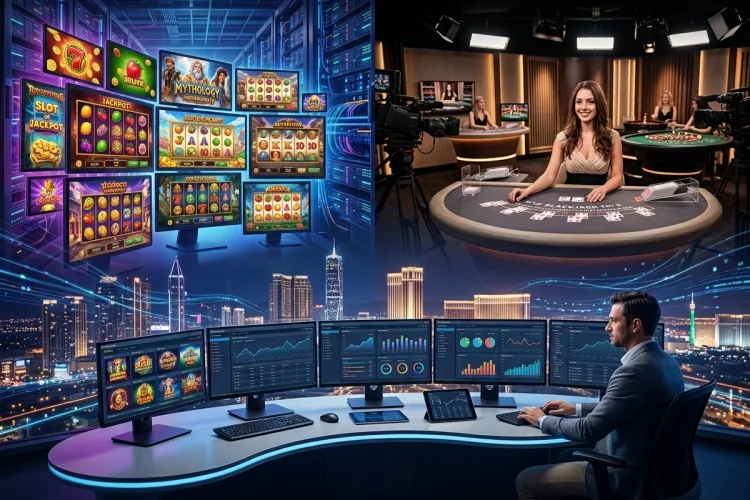
The business comparison of slot providers vs live casino providers is particularly important. Slot suppliers can deliver large game libraries through a single technical connection, giving operators extensive themes and betting options.
Live casino companies offer a more human and immersive product, but their services depend on studios, trained presenters, streaming infrastructure, and continuous operational supervision.
An operator that invests too heavily in only one category may limit its audience. A slot-only lobby can offer variety but may lack the social atmosphere some users expect. A live-focused platform can feel premium yet provide fewer quick-play choices.
The strongest content strategy usually comes from understanding what each supplier contributes and how the two verticals can complement one another.
Content Volume and Portfolio Variety
Slot providers are generally capable of releasing games more frequently because each product is digitally created.
Once the core development and distribution systems are established, teams can produce titles with new artwork, mathematics, mechanics, and themes.
This allows operators to build large libraries serving different preferences. One player may choose a simple three-reel game, while another wants cascading symbols, multiple bonus stages, or a progressive jackpot.
Live casino providers usually offer a smaller number of core game families. Roulette, baccarat, blackjack, poker variants, dice titles, and game shows may be presented through multiple tables or formats.
Their value comes less from the number of unique games and more from presentation quality, dealer interaction, language options, table limits, and studio atmosphere.
Different Cost Structures
Slot production requires investment in software engineering, mathematical design, animation, audio, certification, and distribution. After a title is released, the marginal cost of serving an additional player can be relatively low.
Live casino services have continuing operational expenses. Providers must maintain studios, equipment, cameras, control rooms, surveillance, technical systems, and staffing schedules.
Dedicated tables create another cost layer. An operator may request branded backgrounds, customized interfaces, specific presenters, or private environments.
Official provider disclosures show that live casino business models can include both revenue-based commission and separate fees for dedicated tables.
For smaller operators, shared live tables may be more practical. Larger brands may use customized studios to create a distinctive identity and strengthen customer recognition.
Integration and Platform Management
Slot suppliers commonly distribute games through an RGS or an aggregator. One connection may provide access to many titles, currencies, languages, and device formats.
Live casino integration must transmit bets to the studio system while returning video, timers, table information, and results to the player. It also needs to communicate accurately with the operator’s wallet.
Integration testing is important because a game can perform correctly in isolation but encounter problems when connected to account, payment, reporting, or bonus systems. Operators should test both categories under realistic conditions before launch.
They should examine rejected wagers, interrupted sessions, duplicated requests, currency conversion, bonus restrictions, and unfinished rounds. Reliable documentation and rapid technical support are as important as the games themselves.
Localization and Market Reach
Slot localization generally involves translating game text, adapting currencies, changing symbols when necessary, and meeting local technical rules. A digital title can be distributed across numerous markets after the required modifications and certifications.
Live localization requires additional planning. Providers may need dealers who speak the target language, locally appropriate studio designs, regional betting limits, and schedules that match peak playing hours.
Some suppliers operate studios in several regions to reduce latency and comply with local requirements. Playtech, for example, describes live studio operations serving regional markets and streaming games such as roulette, blackjack, and baccarat.
Operators should not assume that a globally recognized provider is approved everywhere. Licensing, certification, and product availability must be confirmed separately for every target jurisdiction.
Player Engagement and Session Style
Slots attract users through immediate access, audiovisual effects, bonus mechanics, and constant variety. Players can move between titles quickly without waiting for a scheduled round.
Live games create engagement through presenters, table activity, recognizable casino procedures, and interaction. Even when players do not communicate directly, seeing a real person and physical equipment can make the experience feel more social.
The session patterns may also differ. Slots support short rounds and rapid title switching, while live games encourage users to remain at a table for a sequence of rounds.
Operators should measure engagement responsibly. Longer sessions are not automatically better when they increase the risk of uncontrolled play. Reality checks, spending limits, clear clocks, and other player-protection tools should remain visible across both categories.
Compliance and Operational Risk
Slot compliance focuses heavily on RNG testing, mathematical accuracy, game rules, payout behavior, data security, and the treatment of interrupted rounds.
Live casino compliance adds physical and human controls. Providers may need documented dealer training, equipment inspections, secure studio access, surveillance procedures, and independent auditing.
The UK Gambling Commission states that live dealer operations should be fair and independently auditable, with commercial casino-quality equipment and adequately trained croupiers.
Operators remain responsible for checking whether every supplier and product is permitted in the relevant market. A well-known provider does not remove the need for due diligence.
Marketing and Brand Positioning
Slots give operators frequent promotional opportunities because new titles are released regularly. Casinos can build campaigns around themes, mechanics, tournaments, or jackpot networks.
Live products support a different style of positioning. Branded studios, VIP tables, localized presenters, and exclusive game environments can create a more premium image.
However, exclusivity should not replace quality. An attractive branded table still needs stable streaming, correct settlement, professional dealers, and transparent rules.
Operators should select providers based on audience fit rather than industry popularity alone. Data on device use, preferred games, session times, and regional demand can guide a more effective content mix.
Why a Balanced Portfolio Usually Works Best
Slot and live casino suppliers solve different business needs. Slots provide breadth, fast content turnover, and efficient digital distribution. Live games provide human presentation, authenticity, and stronger visual differentiation.
A balanced lobby lets players choose between short individual sessions and more structured table experiences. It also reduces dependence on the performance of one product vertical.
Some large suppliers now combine live, slot, RNG table, and game-show content within the same ecosystem.
Operators can benefit from this convenience, although they should still compare individual products, commercial terms, certifications, and service quality.
When evaluating slot providers vs live casino providers, operators should focus on the different value each category creates. Slot suppliers offer extensive libraries, flexible themes, scalable distribution, and frequent releases.
Live providers add dealers, physical equipment, real-time entertainment, localized studios, and potentially stronger brand differentiation. Neither category can meet every player preference on its own.
A successful casino platform should select licensed suppliers, test integrations thoroughly, review costs, and monitor product performance without ignoring responsible gambling obligations.
Operators should build a portfolio around verified audience needs rather than simply adding the largest number of games.
Players, meanwhile, should choose regulated platforms with transparent rules and reputable developers while keeping firm control over their time and spending.
