

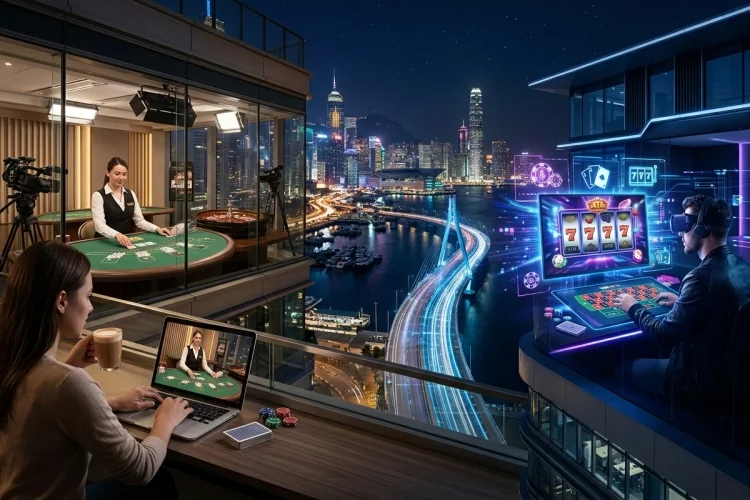
The modern online casino combines two very different technological systems. Live casino games depend on video studios, trained dealers, physical gaming equipment, and real-time communication.
Digital games use software engines, mathematical models, animations, and random number generators. Both can display familiar products such as blackjack and roulette, but the experience behind the screen is not the same.
A live wheel produces a physical result captured by cameras and sensors. A virtual wheel uses software to select and display an outcome.
Examining live casino vs digital casino games from a technological perspective helps explain differences in speed, reliability, fairness controls, and available features.
It also shows why one format may perform better on a particular device or internet connection. Technology does not determine whether a player will win.
Both formats can operate fairly while retaining a mathematical advantage for the casino. The important questions are whether the provider is properly tested, whether the operator is licensed, and whether the game rules are transparent.
The Technology Behind Live Casino Games
Live casino studios use multiple cameras, video encoders, microphones, physical tables, lighting systems, and game-management software. The broadcast must connect the dealer’s actions with the betting interface shown on each player’s screen.
Cards may contain machine-readable information, while roulette results can be recorded through sensors or recognition systems. The software then settles qualifying bets according to the published rules.
Some providers maintain large networks of tables operating across different studios, time zones, and languages. Evolution states that its live portfolio includes thousands of table and game-show environments serving multiple international markets.
Despite the technology, the central outcome remains physical: a card is dealt, a wheel spins, or another real event occurs.
The Technology Behind Digital Games
Digital casino titles are built around a game engine. This engine manages the rules, paytable, graphics, sound, player inputs, and calculation of prizes.
An RNG supplies unpredictable values that determine symbols, cards, or virtual wheel results. The visual animation normally presents an outcome that has already been selected mathematically.
Regulated RNG systems must generate outcomes that can be shown through statistical analysis to be acceptably random. Adaptive behavior that changes the likelihood of winning because of earlier payouts is prohibited under UK technical standards.
Independent laboratories test both the random generator and its integration with the complete game. This helps confirm that the displayed outcome matches the approved mathematical logic.
Different Approaches to Fairness
Live casino integrity depends on physical and operational controls. Equipment must be inspected, dealers must follow approved procedures, and the studio must protect the game from manipulation or recording errors.
UK standards state that commercial-quality equipment should be used and designated staff should monitor operational integrity. Dealer training and documented procedures are also required.
Digital fairness depends more heavily on software testing. Laboratories examine RNG output, game mathematics, maximum payouts, feature rules, and system security.
Neither approach should be judged only by appearance. A visible dealer is not proof of licensing, just as polished animation is not proof that an RNG has been certified.
Odds and House Edge
Live and digital versions of the same game may have similar basic rules, but differences in paytables or optional bets can change the house edge.
For example, a blackjack table may use different dealer rules, deck numbers, doubling restrictions, or blackjack payouts. Roulette may use a single-zero or double-zero wheel.
Digital games can also include multiple configurations of the same title. Therefore, players should read the specific rules rather than assuming that all versions provide identical mathematical value.
Slots have no live equivalent in the traditional sense because their probabilities are built into reels, symbols, paylines, and bonus features. Their theoretical return is generally displayed as RTP.
Game format alone does not reveal which option has the lower house advantage.
Streaming Delay and Connection Quality
Live casino games require continuous communication between the studio and the player. Video data must arrive quickly enough for customers to see the action and place bets during the available window.
Minor delay is normal, but an unstable connection may cause freezing, reduced image quality, or missed betting opportunities. The result itself is usually recorded by the game system even when an individual video feed is interrupted.
Digital games require an internet connection to communicate bets and results, but they generally transfer less continuous video data. This can make them more suitable for slower networks.
Players should avoid placing live bets when their connection is repeatedly dropping. Technical frustration can lead to rushed decisions or misunderstanding about whether a wager was accepted.
Bonuses and Feature Design
Digital games offer extensive freedom in feature design. Developers can use cascading symbols, expanding reels, multipliers, bonus purchases, free spins, and progressive jackpots.
Live games are limited by what can be conducted reliably in a studio, but technology has expanded the possibilities. Hosted game shows can combine physical wheels or devices with digital multipliers and animated bonus elements.
Promotional wagering rules may also treat the formats differently. Slots frequently make a higher contribution toward bonus requirements, while live blackjack, roulette, or baccarat may contribute less or be excluded.
Players should never assume that every casino game qualifies for a promotion. The complete bonus conditions must be checked before activating the offer.
Pace, Automation, and Player Control
Digital products can process rounds very quickly. Some features automatically resolve repeated actions, although availability depends on the product and local regulations.
Live games have a natural delay while dealers manage the table and settle results. This creates a slower rhythm, but customers must place decisions within the shared countdown.
Remote gambling standards can require clear information about the amount being wagered and tools that help users track time.
Players should not interpret faster play as greater efficiency. In gambling, greater speed usually means that more money can be wagered within the same period.
Choosing the Right Format Responsibly
Choose a live game when the dealer interaction, physical process, and slower shared pace improve your entertainment experience. Confirm that your device and connection can handle continuous streaming.
Choose a digital title when you prefer privacy, immediate access, smaller stakes, or a wider variety of games. Check its RTP, volatility, paytable, and RNG-testing information.
Whichever format you select, verify the casino through the relevant regulator’s official register. The UK Gambling Commission, for example, provides searchable records of licensed businesses and regulatory actions.
Set a spending limit before opening the game. Technology can improve presentation and convenience, but it cannot remove the possibility of losing.
Live and digital casino games use different technologies to deliver online gambling.
Live tables combine streaming systems with dealers and physical equipment, while digital titles rely on RNGs, game engines, and automated graphical interfaces.
Both formats can be independently tested and regulated. Their differences are mainly found in pace, interaction, bandwidth requirements, feature variety, and the way results are generated.
Do not choose solely on visual realism, game speed, or advertised bonuses. Compare the exact rules, betting limits, return information, and technical requirements.
Verify the operator’s license, begin with modest stakes, and use time or deposit controls to keep the activity within a fixed entertainment budget.
