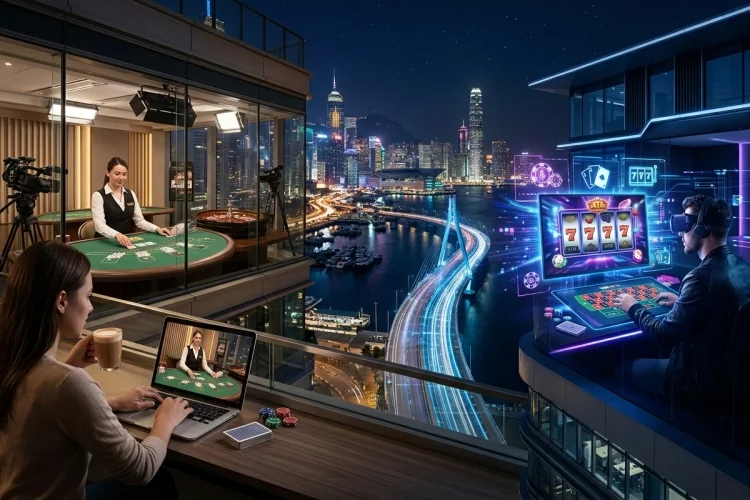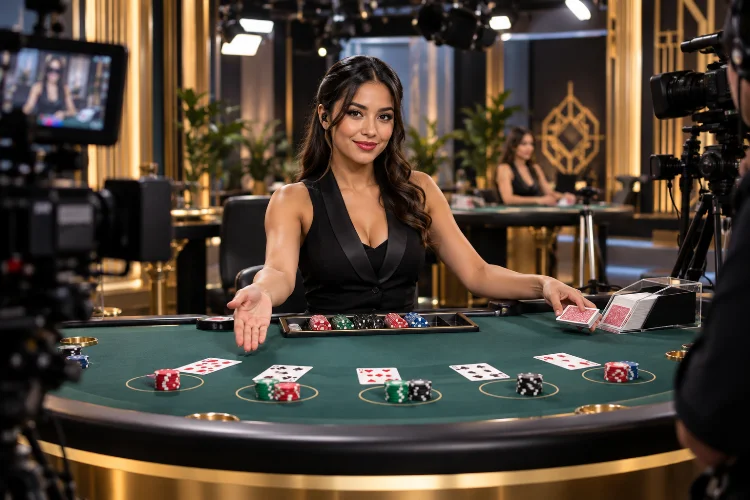
A live casino dealer makes the job look surprisingly simple. Cards appear at the right moment, results are announced clearly, players are acknowledged, and the game keeps moving without awkward pauses.
Behind that smooth performance is a combination of training, concentration, communication, and strict procedure. Understanding What Makes a Professional Live Casino Dealer? means looking beyond personality alone.
A good dealer needs to run a game accurately while also working as an on-camera presenter. In a modern live casino studio, technical precision and human interaction have to work together every round.
Strong Knowledge of the Game Comes First
A professional dealer needs to understand the rules of the game they are presenting.
For blackjack, that includes dealing procedures, hand values, splits, doubles, and the sequence in which decisions are handled. Roulette requires correct wheel procedures, betting periods, and accurate announcement of results. Baccarat has its own dealing rules and third-card procedures.
Knowing the rules is not simply about answering player questions. The dealer must perform them repeatedly without changing the way the game operates.
UK Gambling Commission standards for live dealer studios state that croupiers should receive adequate training so games are provided fairly according to documented rules and procedures. Evidence of initial and refresher training should also be maintained.
That makes technical knowledge the foundation of professional dealing.
Accuracy Matters More Than Speed
Live casino games need to move at a comfortable pace, but speed should never come at the cost of accuracy.
A dealer must handle cards, operate equipment, announce results, and follow the correct sequence of actions. A small procedural error can interrupt a round and require intervention from studio staff.
Professional dealers therefore develop movements that are both efficient and repeatable.
Evolution describes its game presenter role as following game procedures and on-screen prompts while keeping gameplay smooth and accurate. Its training covers games such as blackjack, roulette, and baccarat before new presenters begin working live.
The best dealer may not be the person who moves fastest. It is the person who can maintain the same accuraccy across hundreds of routine actions.
Clear Communication Keeps Players Oriented
Unlike a dealer at a physical casino table, an online live dealer communicates with people watching through phones, tablets, and computers.
That creates a different presentation challenge.
Players need to know when betting opens, when it closes, what result occurred, and what happens next. The dealer’s voice should therefore be clear without sounding robotic.
Evolution’s current game presenter descriptions specifically include explaining rules, announcing winners, chatting with players, and maintaining friendly professional communication.
Good communication becomes especially useful for newer players. Someone joining live baccarat for the first time may not understand every stage of the round.
A professional presenter can make the experience easier to follow without turning every hand into a long tutorial.
Camera Presence Is Part of the Job
Modern live casino dealing is partly a broadcast role.
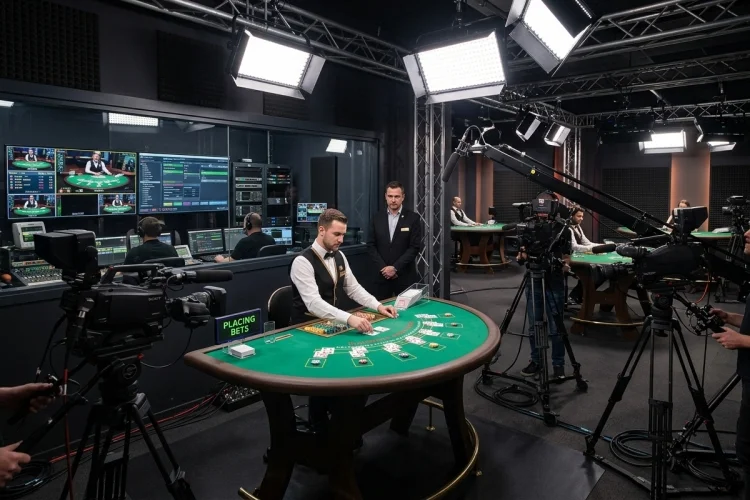
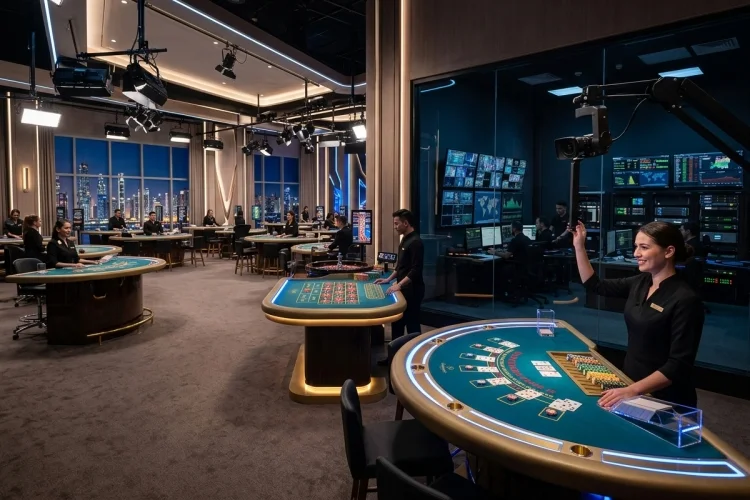
The dealer is not just sitting at a gaming table. They are performing in front of cameras inside a purpose-built studio while players watch remotely.
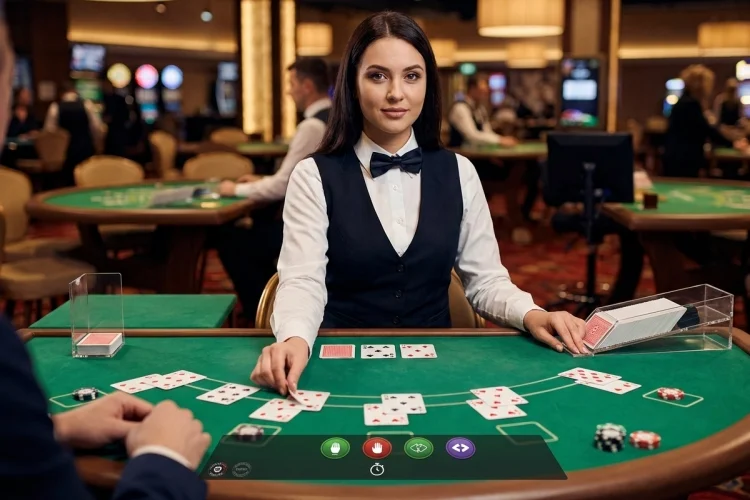
That means posture, facial expression, speaking style, eye contact with the camera, and overall confidence can affect the experience.
Evolution describes the role as a combination of live dealer, on-camera host, and customer-service professional. New presenters are trained not only in game techniques but also in presentation skills before going live.
A dealer does not need to behave like an exaggerated television personality. In fact, excessive enthusiasm can feel unnatural.
The goal is to look comfortable, approachable, and profesional while still giving the game enough energy to avoid feeling mechanical.
Attention to Detail Protects Game Integrity
Professional dealing involves much more than remembering who won.
Dealers need to follow exact procedures around cards, wheels, gaming equipment, betting periods, and results. Those actions form part of a wider integrity system inside the studio.
UK Gambling Commission guidance requires live dealer operations to be fair and independently auditable.
It also recommends video surveillance covering dealer activity, supervision of dealing procedures, controlled access to gaming equipment, and game logs that can be analysed for unusual trends.
This explains why disciplined movements matter.
A dealer should not casually invent a shortcut because it feels faster. Standardised procedures allow supervisors and recorded footage to establish exactly what happened during a disputed or unusual round.
Consistency is therefore a security feature as well as a presentation skill.
Professional Dealers Stay Calm When Something Goes Wrong
Even a carefully controlled live studio can experience unexpected situations.
A card might be exposed incorrectly. A ball may behave unusually. Equipment may need attention, or a player might ask a question while the dealer is completing another procedure.
The professional response is not to improvise wildly.
Dealers are trained to follow studio procedures and, when necessary, allow supervisors or other authorised staff to handle the issue.
UK regulatory standards specifically call for staff supervision of dealer activities and the integrity of live gambling operations.
Remaining calm also improves the customer experience. A nervous presenter can make a small interruption feel much more serious than it actually is.
Confidence comes partly from personality, but it mostly comes from knowing the procedure.
Player Interaction Needs the Right Balance
A strong live dealer should be welcoming without becoming distracting.
Chat is one of the major differences between live dealer gaming and automated casino software. Players can often send messages, and the presenter may respond between rounds.
That interaction makes the experience feel more social.
However, the dealer still needs to prioritise the game. Long conversations should not interfere with announcing results or following dealing procedures.
Current Evolution job descriptions emphasise both customer interaction and consistent studio standards, describing presenters as responsible for professional communication while keeping games moving smoothly.
The best balance is friendly but neutral. Dealers can welcome players and maintain positive conversation without pressuring anyone to wager more or continue playing.
Consistency Is an Underrated Skill
Anyone can appear energetic for a few minutes. Professional dealing requires maintaining standards throughout a full shift.
The dealer may present hundreds of rounds while repeating many of the same announcements and movements.
Concentration cannot disappear simply because the routine becomes familiar.
Evolution’s studio operations run around the clock, and its presenter recruitment material emphasises attention to detail, professionalism, work ethic, and the ability to follow presentation requirements consistently.
This is where experience becomes visible.
An experienced dealer makes repetitive procedures look natural rather than rushed. They keep their communication clear and their movements consistant even when nothing unusual is happening.
That reliability is a major part of what makes live casino feel professional.
Technology Has Changed the Dealer’s Role
A live dealer now works inside a digital production environment.
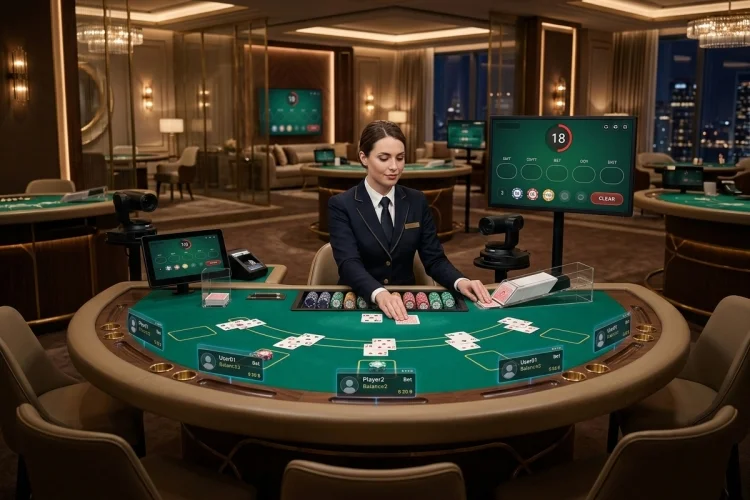
Multiple cameras, streaming systems, game interfaces, on-screen prompts, and automated betting software operate around the physical table.
Evolution describes its live products as combining professional hosts with advanced streaming technology and purpose-built studio environments.
The dealer does not need to operate every technical system personally, but they must understand how their actions fit into the broadcast.
For example, timing matters because online betting systems need a clear window before the dealer moves to the next stage.
This blend of physical casino technique and digital presentation is one reason modern live dealing is quite differnt from simply dealing cards across a traditional table.
So, What Makes a Professional Live Casino Dealer? It is the combination of game knowledge, accurate procedures, clear communication, camera confidence, concentration, and consistent professionalism.
A polished dealer makes complicated studio processes feel effortless to the player. Next time you watch a live table, pay attention not only to the cards or wheel but also to the precision behind every announcement and movement.