

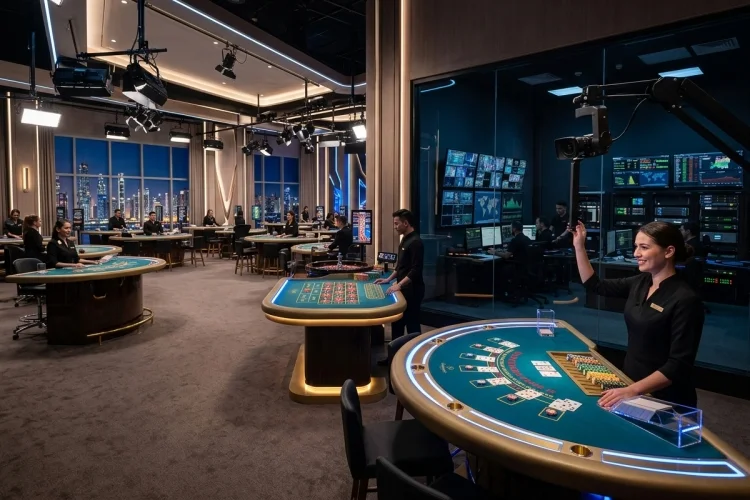
Live casino studios serve two audiences at the same time. Players expect clear video, professional dealers, fair results, and enjoyable games.
Casino operators expect reliable availability, regulatory compliance, scalable capacity, strong branding, and technical support. Meeting both sets of expectations requires more than building an attractive room and installing several tables.
A professional studio functions like a combination of a casino floor, television production facility, technology center, and regulated operating environment.
Understanding what makes a good live casino studio from an operational perspective reveals why staffing, table scheduling, security, equipment control, localization, and service management are so important.
A studio may operate continuously and serve customers across multiple jurisdictions, languages, devices, and time zones.
Major providers continue to invest in purpose-built locations and regional facilities to meet demand for live casino products. Evolution reported open advertises dedicated studio space across several international regions.
Efficient Studio Layout
A good facility is designed around safe and efficient movement. Dealers, supervisors, camera operators, technicians, and security employees need to reach their work areas without interfering with active games.
Table spacing should allow cameras to capture clean images while limiting unwanted noise from nearby games. Lighting, backgrounds, cables, and equipment must be arranged consistently.
Operational areas may include dealer preparation rooms, equipment storage, monitoring stations, training spaces, server rooms, and production-control centers.
A practical layout improves more than appearance. It can reduce setup errors, simplify maintenance, support surveillance, and allow the studio to add tables as demand grows.
Strong Recruitment and Continuous Training
The quality of a live studio depends heavily on its employees. Providers need dealers who understand table procedures and can communicate effectively on camera.
Recruitment should consider language ability, presentation skills, accuracy, reliability, and the capacity to remain focused during repetitive sessions.
Some providers train new game presenters without requiring previous dealing experience, which makes internal training programs especially important. Evesentation as part of its wider studio operations and in-house live casino delivery chain.
Training should continue after hiring. Refresher sessions can cover new games, updated procedures, equipment changes, customer interaction, and regulatory requirements.
Performance reviews should focus on both personality and procedural accuracy.
Consistent Quality Control
A professional studio should monitor each table during operation. Supervisors can identify dealer errors, damaged cards, audio problems, incorrect camera framing, or delays in result recognition.
Quality teams should review recorded sessions and recurring technical incidents. One isolated problem may be accidental, while repeated issues can reveal weaknesses in training or equipment.
Providers also need procedures for correcting mistakes. The dealer should know when to pause, call a supervisor, or replace a piece of equipment.
Independent auditing adds another layer of assurance. UK standards require live dealer operations to be fair and indepeas including staffing, premises, systems, and technical synchronization.
Localized and Accessible Tables
Live casino audiences can differ by region. Players may prefer dealers who speak their language, use familiar terminology, and operate during local peak hours.
Localization goes beyond translating the betting interface. It can include table design, presenter language, game variants, currencies, wagering limits, and culturally appropriate presentation.
Regional studios can also reduce streaming distance and help providers meet local regulatory requirements. Playtech has described live scluding Romania, Switzerland, and the United States.
However, every localized table should maintain the same core standards for fairness, equipment quality, training, and security.
Shared and Dedicated Studio Options
Shared tables allow several casino brands to offer the same live game. They are efficient because the provider manages the studio, dealer, and stream for a broad audience.
Dedicated tables are created for a particular operator. Branding may include customized backgrounds, uniforms, table colors, interface elements, and exclusive presenters.
Dedicated environments can strengthen brand identity, but they require more planning and ongoing resources. Playtech has launched multiple branded dedicated studios owing how customization has become an important commercial part of the live casino market.
A good studio should support customization without weakening compliance or operational consistency. Branding must never obscure rules, cards, outcomes, or responsible gambling information.
Reliable Capacity and Table Scheduling
A live studio has physical capacity limits. Unlike an RNG slot, a conventional table may support only a certain number of seated players.
Providers must forecast demand and schedule enough dealers, supervisors, and tables for busy periods. Long waiting lists or repeated table closures can reduce the practical value of the service.
Some formats solve capacity problems by allowing unlimited players to wager on the same streamed round. Others use additional tables or different betting-limit categories.
Availability should remain transparent. Operators need accurate schedules, while players should know whether a table is open, full, or temporarily unavailable before entering.
Compliance and Market Approval
A studio may serve several jurisdictions, but regulatory approval in one market does not automatically cover every other region. Providers and operators must understand which audits, licenses, and technical standards apply.
The UK Gambling Commission introduced specific standards for live dealer studios and may existing review from another jurisdiction does not sufficiently cover those requirements.
Compliance also involves des, trained personnel, commercial-quality equipment, auditable records, and fair operation.
A strong provider maintains organized certification records and supports casino partners during licensing reviews. Unclear ownership or missing studio information can create unnecessary regulatory risk.
Responsive Technical and Operational Support
Live casino operations can experience camera faults, internet disruptions, incorrect overlays, equipment damage, or staffing shortages. A studio needs teams capable of responding immediately.
Support responsibilities should be clearly divided. Technical employees may handle streams and servers, while floor supervisors manage dealer or equipment issues.
Casino operators also need timely updates when a table is unavailable or a settlement requires review. Good communication prevents frontline customer-service teams from giving players incomplete information.
Incident reports should explain what happened, which rounds were affected, how balances were handled, and what corrective action was taken. This transparency helps preserve trust after an unavoidable failure.
What makes a good live casino studio for players and operators is disciplined management.
An efficient layout, skilled employees, continuous quality control, localized tables, scalable capacity, regulatory compliance, and responsive support create a dependable service.
A beautiful set can attract attention, but long-term quality depends on the systems operating behind it.
Studios should provide fair games, clear results, professional presenters, reliable availability, and accurate records across every market they serve.
Operators should verify audits, service commitments, and local approvals before choosing a provider.
Players should select regulated platforms with recognizable studios, read table rules, and use personal limits to keep live gaming affordable and controlled.