

What Makes a Professional Live Casino Dealer? Skills That Really Matter

What Makes a Professional Live Casino Dealer? Skills That Really Matter

A live casino dealer makes the job look surprisingly simple. Cards appear at the right moment, results are announced clearly, players are acknowledged, and the game keeps moving without awkward pauses.

Behind that smooth performance is a combination of training, concentration, communication, and strict procedure. Understanding What Makes a Professional Live Casino Dealer? means looking beyond personality alone.

A good dealer needs to run a game accurately while also working as an on-camera presenter. In a modern live casino studio, technical precision and human interaction have to work together every round.

Strong Knowledge of the Game Comes First

A professional dealer needs to understand the rules of the game they are presenting.

For blackjack, that includes dealing procedures, hand values, splits, doubles, and the sequence in which decisions are handled. Roulette requires correct wheel procedures, betting periods, and accurate announcement of results. Baccarat has its own dealing rules and third-card procedures.

Knowing the rules is not simply about answering player questions. The dealer must perform them repeatedly without changing the way the game operates.

UK Gambling Commission standards for live dealer studios state that croupiers should receive adequate training so games are provided fairly according to documented rules and procedures. Evidence of initial and refresher training should also be maintained.

That makes technical knowledge the foundation of professional dealing.

Accuracy Matters More Than Speed

Live casino games need to move at a comfortable pace, but speed should never come at the cost of accuracy.

A dealer must handle cards, operate equipment, announce results, and follow the correct sequence of actions. A small procedural error can interrupt a round and require intervention from studio staff.

Professional dealers therefore develop movements that are both efficient and repeatable.

Evolution describes its game presenter role as following game procedures and on-screen prompts while keeping gameplay smooth and accurate. Its training covers games such as blackjack, roulette, and baccarat before new presenters begin working live.

The best dealer may not be the person who moves fastest. It is the person who can maintain the same accuraccy across hundreds of routine actions.

Clear Communication Keeps Players Oriented

Unlike a dealer at a physical casino table, an online live dealer communicates with people watching through phones, tablets, and computers.

That creates a different presentation challenge.

Players need to know when betting opens, when it closes, what result occurred, and what happens next. The dealer’s voice should therefore be clear without sounding robotic.

Evolution’s current game presenter descriptions specifically include explaining rules, announcing winners, chatting with players, and maintaining friendly professional communication.

Good communication becomes especially useful for newer players. Someone joining live baccarat for the first time may not understand every stage of the round.

A professional presenter can make the experience easier to follow without turning every hand into a long tutorial.

Camera Presence Is Part of the Job

Modern live casino dealing is partly a broadcast role.

The dealer is not just sitting at a gaming table. They are performing in front of cameras inside a purpose-built studio while players watch remotely.

That means posture, facial expression, speaking style, eye contact with the camera, and overall confidence can affect the experience.

Evolution describes the role as a combination of live dealer, on-camera host, and customer-service professional. New presenters are trained not only in game techniques but also in presentation skills before going live.

A dealer does not need to behave like an exaggerated television personality. In fact, excessive enthusiasm can feel unnatural.

The goal is to look comfortable, approachable, and profesional while still giving the game enough energy to avoid feeling mechanical.

Attention to Detail Protects Game Integrity

Professional dealing involves much more than remembering who won.

Dealers need to follow exact procedures around cards, wheels, gaming equipment, betting periods, and results. Those actions form part of a wider integrity system inside the studio.

UK Gambling Commission guidance requires live dealer operations to be fair and independently auditable.

It also recommends video surveillance covering dealer activity, supervision of dealing procedures, controlled access to gaming equipment, and game logs that can be analysed for unusual trends.

This explains why disciplined movements matter.

A dealer should not casually invent a shortcut because it feels faster. Standardised procedures allow supervisors and recorded footage to establish exactly what happened during a disputed or unusual round.

Consistency is therefore a security feature as well as a presentation skill.

Professional Dealers Stay Calm When Something Goes Wrong

Even a carefully controlled live studio can experience unexpected situations.

A card might be exposed incorrectly. A ball may behave unusually. Equipment may need attention, or a player might ask a question while the dealer is completing another procedure.

The professional response is not to improvise wildly.

Dealers are trained to follow studio procedures and, when necessary, allow supervisors or other authorised staff to handle the issue.

UK regulatory standards specifically call for staff supervision of dealer activities and the integrity of live gambling operations.

Remaining calm also improves the customer experience. A nervous presenter can make a small interruption feel much more serious than it actually is.

Confidence comes partly from personality, but it mostly comes from knowing the procedure.

Player Interaction Needs the Right Balance

A strong live dealer should be welcoming without becoming distracting.

Chat is one of the major differences between live dealer gaming and automated casino software. Players can often send messages, and the presenter may respond between rounds.

That interaction makes the experience feel more social.

However, the dealer still needs to prioritise the game. Long conversations should not interfere with announcing results or following dealing procedures.

Current Evolution job descriptions emphasise both customer interaction and consistent studio standards, describing presenters as responsible for professional communication while keeping games moving smoothly.

The best balance is friendly but neutral. Dealers can welcome players and maintain positive conversation without pressuring anyone to wager more or continue playing.

Consistency Is an Underrated Skill

Anyone can appear energetic for a few minutes. Professional dealing requires maintaining standards throughout a full shift.

The dealer may present hundreds of rounds while repeating many of the same announcements and movements.

Concentration cannot disappear simply because the routine becomes familiar.

Evolution’s studio operations run around the clock, and its presenter recruitment material emphasises attention to detail, professionalism, work ethic, and the ability to follow presentation requirements consistently.

This is where experience becomes visible.

An experienced dealer makes repetitive procedures look natural rather than rushed. They keep their communication clear and their movements consistant even when nothing unusual is happening.

That reliability is a major part of what makes live casino feel professional.

Technology Has Changed the Dealer’s Role

A live dealer now works inside a digital production environment.

Multiple cameras, streaming systems, game interfaces, on-screen prompts, and automated betting software operate around the physical table.

Evolution describes its live products as combining professional hosts with advanced streaming technology and purpose-built studio environments.

The dealer does not need to operate every technical system personally, but they must understand how their actions fit into the broadcast.

For example, timing matters because online betting systems need a clear window before the dealer moves to the next stage.

This blend of physical casino technique and digital presentation is one reason modern live dealing is quite differnt from simply dealing cards across a traditional table.

So, What Makes a Professional Live Casino Dealer? It is the combination of game knowledge, accurate procedures, clear communication, camera confidence, concentration, and consistent professionalism.

A polished dealer makes complicated studio processes feel effortless to the player. Next time you watch a live table, pay attention not only to the cards or wheel but also to the precision behind every announcement and movement.
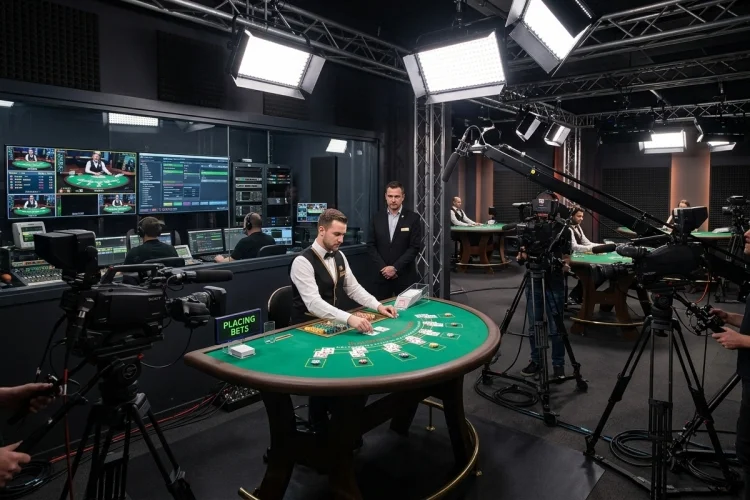
Behind the Scenes at a Live Casino Table: How Every Round Works

Behind the Scenes at a Live Casino Table: How Every Round Works

A live blackjack or roulette table can look surprisingly simple on your screen. You see a dealer, physical cards or a wheel, a countdown timer, and digital controls for placing your bet.

What you do not see is the production system supporting every round. Going Behind the Scenes at a Live Casino Table reveals something closer to a television studio combined with a casino operation.

Professional dealers, cameras, lighting, software, supervisors, game records, and streaming infrastructure all need to stay synchronized. Here is what actually happens before, during, and after a typical live round.

The Table Sits Inside a Purpose-Built Studio

Most large live casino operations are produced from dedicated studios designed specifically for broadcasting games.

The tables may look similar to those inside a physical casino, but the surrounding space is built around cameras, lighting, audio, networking, and operational control.

Evolution describes modern live casino as a combination of global studio production, professional hosts, and advanced streaming technology.

Pragmatic Play similarly says its live operation uses a purpose-built studio, professionally trained dealers, advanced broadcasting systems, and multiple 4K-quality cameras.

That means table placement is rarely random. Camera angles, dealer movement, lighting reflections, and equipment visibility all have to be considered before broadcasting begins.

Dealers Do More Than Deal Cards

The dealer is the person players notice first, but the role involves much more than smiling at a camera.

A blackjack dealer must follow card-handling procedures while keeping the game moving at the correct pace. Roulette dealers manage betting periods, spin the wheel, announce results, and prepare for the next round.

In Great Britain’s regulated market, technical standards say live casino croupiers should receive adequate training and follow documented procedures and game rules. Evidence of initial and refresher training should also be maintained.

Presentation skills matter as well.

Modern live casino production has evolved beyond the early webcam-style approach. Evolution says dealers became part of a more professional broadcast environment as studios added better sound, multiple cameras, larger sets, and improved communication with players.

The result is a role somewhere between casino dealer and live presenter.

Cameras Follow Different Parts of the Action

One camera would make a modern live table feel very limited.

Instead, studios can use several cameras to capture the dealer, betting area, cards, roulette wheel, or other important parts of the game.

Evolution has used multi-camera installations around tables and dealers, while Pragmatic Play lists multiple 4K cameras among its live casino features.

The camera angle may change during a round.

A roulette broadcast might begin with the dealer and betting layout before shifting toward the spinning wheel. Baccarat can use close-up shots when cards are revealed.

Evolution says its modern live products grew from basic webcam streams into productions using multiple HD cameras, improved audio, and more sophisticated studio presentation.

That visual polish is part of why the experience can feel closer to television than an ordinary webcam call.

The Betting Window Must Match the Physical Game

The player is not simply watching a video.

A software layer sits around the broadcast and handles wagers, timers, balances, statistics, chat, and game controls.

Imagine a roulette round. The digital betting interface opens while the dealer prepares the wheel. Players place wagers until the betting window closes, after which additional bets cannot be accepted for that round.

Blackjack is even more interactive. Players may need to select hit, stand, double, or split while the dealer waits for decisions.

The digital controls and physical action therefore need careful syncronization.

Evolution describes its live interface as allowing players to watch real-time action while placing bets and making game decisions remotely.

Results Need to Become Digital Data

Once the physical game produces an outcome, the online system needs to know exactly what happened.

For roulette, the winning pocket must be recorded. Baccarat requires the cards and resulting hand totals. Blackjack must track the cards dealt and relevant player decisions.

Different studios can use different technical methods. Evolution has noted that technologies introduced during live casino development included barcoded cards and improved digital communication between tables, dealers, and player interfaces.

The important point is that the physical outcome eventually becomes structured digital information.

That data is then used to display the result, settle applicable wagers, update game history, and prepare the next round.

In Great Britain, remote gambling standards require operators to take reasonable steps to ensure wagers are accepted, processed, and settled according to the published rules.

Surveillance Watches What Players Cannot See

The attractive camera feed shown to players is not necessarily the only video being recorded.

Behind the public broadcast, surveillance can monitor dealer procedures and table integrity.

UK Gambling Commission guidance for live dealer studios says dealer activity should be supervised and video surveillance should cover gaming areas with enough detail to determine whether procedures and game rules were followed.

Access to secure areas and gaming equipment should also be controlled.

This creates two very different visual systems.

The player-facing camera exists primarily to present the game clearly and attractively. Surveillance footage exists to create operational oversight and an auditable record.

That distinction is easy to forget when the only view you normally see is the polished public stream.

Supervisors Monitor the Table Too

Dealers are not working alone.

Live studios also rely on supervisors and operational teams who can monitor dealer activity, equipment, tables, streams, and unusual events.

UK standards explicitly call for staff responsible for supervising dealer activities and integrity. They also require game logs and event statistics that can be analysed for trends involving game performance, staff, and gaming locations.

So a table that looks like a one-person operation may actually involve multiple people behind the scenes.

Technical personnel can deal with camera or connection issues, while operational staff oversee procedures.

The player usually sees none of this unless something goes wrong—which is exactly how a smooth production is supposed to feel.

Streaming Adds Another Layer of Complexity

After cameras capture the game, the video still has to reach players.

The stream must be encoded, transmitted, delivered across networks, and displayed on devices while the betting interface remains aligned with the table.

Evolution says latency, sound, and video synchronisation became standard concerns as live casino technology developed.

A player’s own internet connection can also affect the final experiance.

This is why a delayed video feed does not necessarily mean the dealer is operating slowly. The delay may occur somewhere between the studio, distribution network, and player’s device.

Reliable live casino production is therefore partly a broadcasting challenge and partly a software engineering challenge.

What Happens When Something Goes Wrong?

Technical failures are possible even in professional studios.

A player’s connection might drop, software could experience an error, or a wider service interruption could affect the game.

Regulated operators need procedures for these situations. UK technical standards say systems should retain enough information to deal fairly with interrupted gambling and, where appropriate, restore game states or void affected wagers.

For a multi-stage game, this can include information such as cards already dealt and bets already placed.

That behind-the-scenes record becomes extremely important during an interruption.

What appears to the player as a frozen screen may therefore trigger a much more detailed operational process in the background.

Looking Behind the Scenes at a Live Casino Table shows that every round involves far more than a dealer and a camera.

Studio crews, supervisors, streaming technology, betting software, surveillance, and game records all work together to connect physical action with a digital interface.

Next time you watch a live table, pay attention to the production – the smoothest parts are often the ones you never notice.